Quick Summary
Property fraud is increasingly becoming a concern as criminals use identity theft, forged documents, and public records to target real estate assets. In Alabama, consumer protection experts are warning that deed fraud can create costly legal disputes and ownership challenges that may take months to resolve.
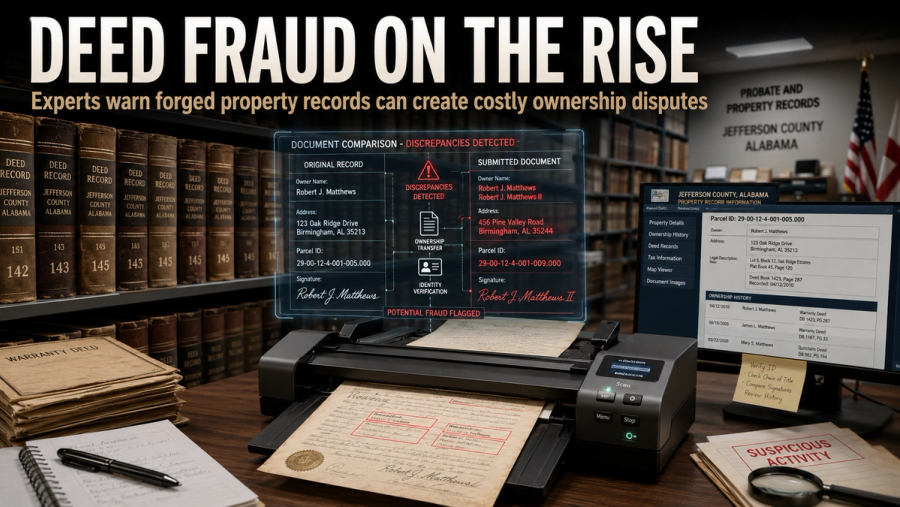
In Alabama, fraud experts are warning homeowners about a growing increase in deed fraud, a crime that can impact property ownership through forged documents and identity theft. According to consumer advocates, suspects may use publicly available information to impersonate property owners and create fraudulent deeds or ownership transfers. Once filed, these documents can create the appearance of legitimate ownership changes within public records systems.
Experts say many homeowners are unaware of how property records are maintained and assume ownership changes require extensive verification. However, fraudulent filings can sometimes go unnoticed until a property owner receives unexpected notices, discovers unauthorized activity, or attempts to sell or refinance a property. Officials warn that resolving these disputes can involve legal expenses, document reviews, and lengthy administrative processes. As awareness grows, consumer protection groups continue encouraging property owners to stay informed about activity connected to their real estate holdings.
This story was first posted on WBRC6 News